
Department of Plastic and Aesthetic Surgery at Viet Nhat General Hospital
Operating License Number: 3788/HNO-GPHD (Issued by the Hanoi Department of Health)


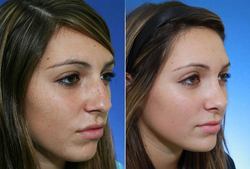
RHINOPLASTY | NOSE AUGMENTATION
Rhinoplasty (nose augmentation) is a cosmetic procedure that enhances the shape, proportions, and structure of the nose, creating a more balanced and natural facial appearance. By combining advanced techniques with high professional expertise, this service not only improves aesthetics but also ensures safety and long-lasting results.


NASAL STRUCTURE
-
Nasal bones: Located in the upper third, providing a firm foundation and determining the height and straightness of the nasal bridge
-
Nasal cartilage: Occupies the lower two-thirds, flexible and essential for shaping the nasal tip and nostrils (includes septal, alar, and upper lateral cartilage)
-
Soft tissue & skin: Cover the entire framework; skin thickness influences the smoothness and definition of the final nasal shape
-
Nasal cavity: Internal space that filters, warms, and humidifies air before it enters the lungs

RHINOPLASTY TECHNIQUE – STRUCTURAL CORRECTION
-
Assessment of nasal structure: Examine the nasal bridge, tip, nostrils, and skin thickness; evaluate cartilage quality (septal, ear, or rib) for optimal planning.
-
Creating the nasal pocket: Carefully lift soft tissue from the underlying bone and cartilage to create a precise space for implants or cartilage grafts, minimizing trauma.
-
Tip support reconstruction: Use autologous cartilage to reinforce the tip, adjust projection and rotation, ensuring a firm and long-lasting structure.
-
Bridge augmentation: Place implants or layered cartilage grafts to raise and straighten the nasal bridge, achieving a smooth, natural contour.
-
Tip reshaping: Trim, fold, or reshape the alar cartilage to refine the tip shape, narrow the tip, and improve symmetry.
-
Alar/nostril adjustment: Reduce wide nostrils or flared alae using small, precise incisions tailored to the patient’s anatomy.
-
Closure & stabilization: Meticulously suture all incisions and apply external splints or internal support to maintain the new nasal shape during early healing.
-
Final adjustment & evaluation: Check bridge alignment, tip projection, and nostril symmetry; confirm airway function while preserving natural nasal aesthetics.

POST-RHINOPLASTY CARE AND RECOVERY
-
irst 24–48 hours: Apply cold compresses to the nose and eye area to reduce swelling and bruising; keep your head elevated while resting; avoid bending over, heavy lifting, or vigorous activity.
-
Incision care: Gently clean the surgical area as instructed; do not touch, press, or rub the nose; replace dressings or gauze as directed by your surgeon.
-
Medication: Take prescribed pain relievers, anti-inflammatories, or antibiotics exactly as directed; avoid aspirin or other blood-thinning medications unless approved.
-
Protecting the nose: Avoid wearing heavy glasses, swimming, saunas, or exposing the nose to heat; limit contact sports or activities that could cause trauma for several weeks.
-
Diet & lifestyle: Eat a nutritious diet rich in protein and vitamin C to support healing; stay well hydrated and get adequate rest; avoid alcohol and smoking for at least 2 weeks.
-
Follow-up care: Attend all scheduled check-ups (1 week, 1 month, 3 months, 6 months); surgeon will monitor swelling, tip and bridge stability, incision healing, and breathing function; report any unusual pain, persistent swelling, or bleeding.
-
Recovery timeline: Most swelling and bruising subside within 1–2 weeks; nasal tip stabilizes in 1–3 months; final, natural results become fully visible within 6–12 months

 |  |  |
|---|---|---|
 |  |  |